📄 Medical Abbreviations & Latin in Pharmacy
Welcome to this essential module on pharmaceutical terminology. To a patient, a prescription might look like a series of random letters, but to a professional, it is a precise set of instructions. Learn the meaning of common prescription abbreviations and, more importantly, master the skill of translating this medical jargon into clear, actionable advice for your clients.
Many prescriptions still rely on Latin abbreviations. While these save time and space for the prescriber, they represent a significant barrier to treatment adherence if the patient leaves the counter confused. As a pharmacist, you are the final safety filter: your job is to ensure the "Bis in die" on paper becomes a clear "Twice a day" in the patient's mind.
🔤 Most Common Abbreviations in Prescriptions
Familiarize yourself with these core abbreviations. They are the building blocks of most prescriptions you will handle in a clinical or community setting.
| Abbreviation | Latin Root | Plain English | Usage Example |
|---|---|---|---|
| PO | Per os | By mouth | Take one tablet PO |
| BID / TID / QID | Bis / Ter / Quater in die | 2 / 3 / 4 times a day | Take 1 capsule BID |
| PRN | Pro re nata | As needed | Take PRN for pain |
| HS | Hora somni | At bedtime | Take 1 tablet HS |
| AC / PC | Ante / Post cibum | Before / After meals | Take AC (Before meals) |
| OU / AD | Oculus uterque / Auris dextra | Both eyes / Right ear | Use drops OU |
🗣️ How to Explain Abbreviations to Patients
A professional pharmacist never uses Latin with a patient. Use "Plain English" to ensure they understand exactly how to take their medication safely.
You say to the patient: "Please take one tablet by mouth, three times a day (for example: breakfast, lunch, and dinner)."
You say to the patient: "You should use these drops in both eyes only when you feel you need them, for example, if they feel dry or irritated."
You say to the patient: "Make sure to take this capsule about 30 minutes before your meals."
🖼️ Visual Reference & Practice
Review these visual aids to better understand how abbreviations appear on actual medication labels and clinical charts.
 Full List |  The Label |  Latin Reference |
| PO (By Mouth) | OU (Both Eyes) | 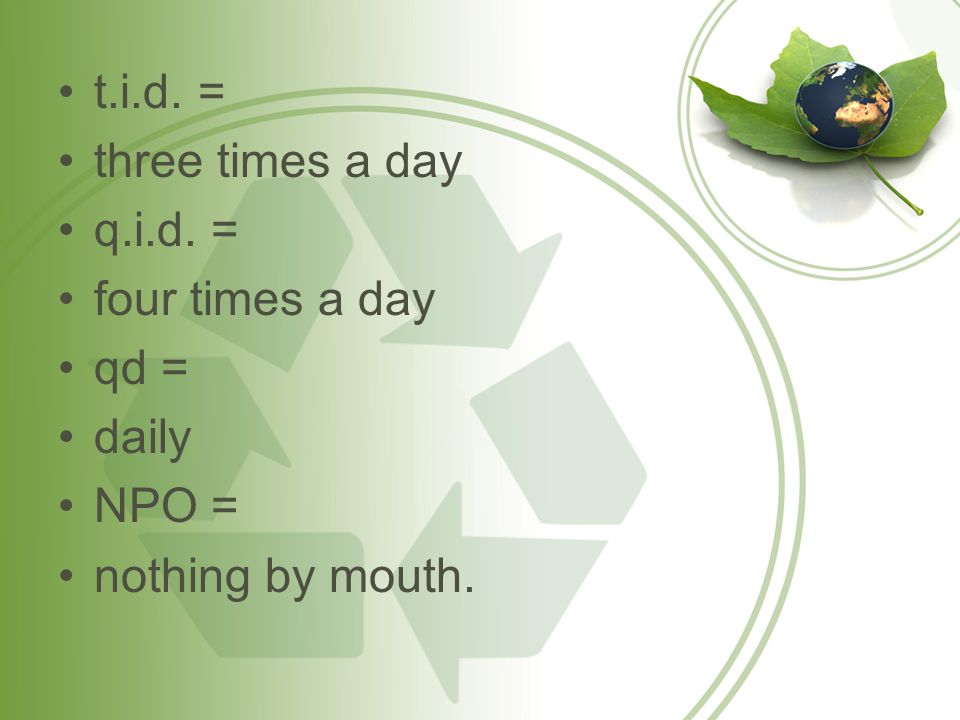 TID (3x Daily) |
Tip: Practice with your colleagues by "translating" a dummy prescription once a day!
¡Hora de hacer ejercicios! Explora con los botones los distintos grupos.
Prescription Abbreviation Quiz
Complete the Sentences with the Correct Term
EXAM RESULTS
